


Know your colony
Porcellio scaber “Orange”
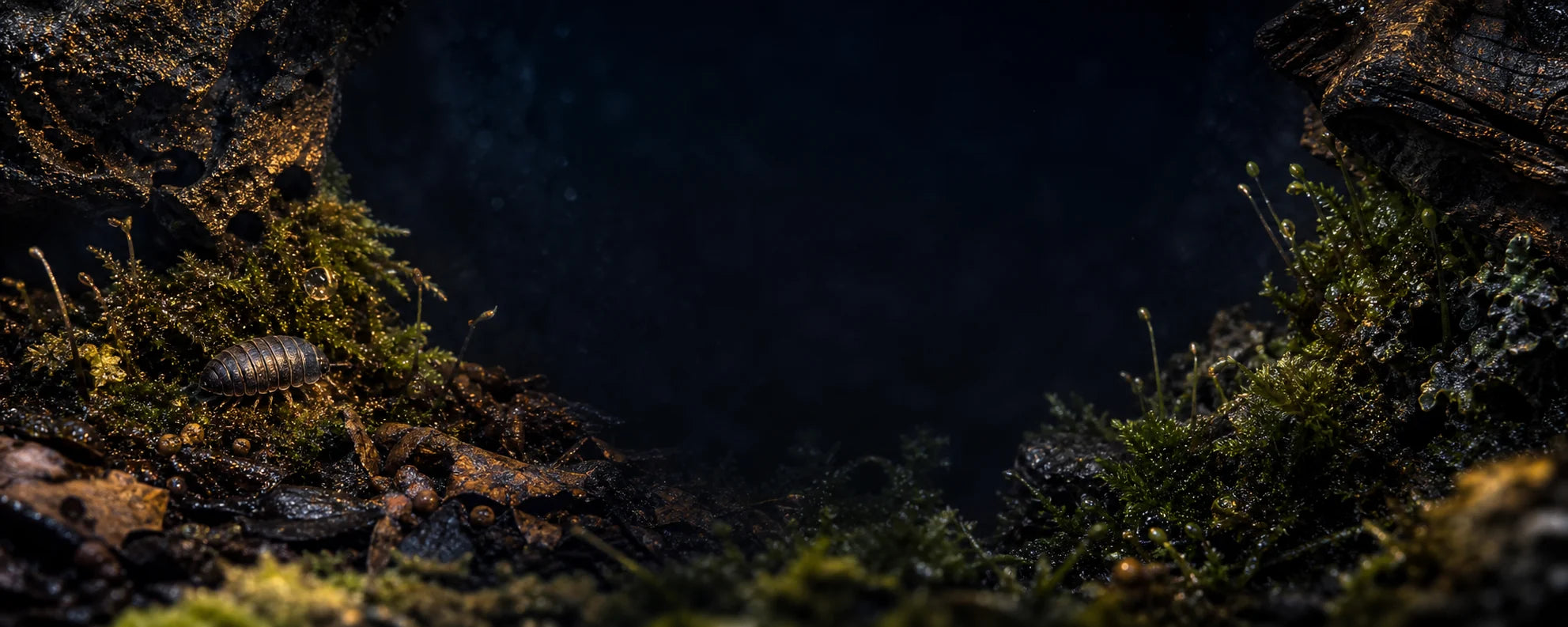
“Orange” is a color morph of Porcellio scaber, a terrestrial crustacean. It needs moisture to support its breathing structures and does not roll into a complete ball. Keep distinct morphs separately if preserving their color line matters to you.
Provision the habitat
Build a forest-floor stronghold
Use a secure, ventilated enclosure with enough floor space for separate moisture zones. A small starter culture can begin in a smooth-sided tub; expand as the colony grows. Add roughly 5–8 cm of suitable substrate, a generous hardwood leaf layer, and cork or bark shelter.
Keep the enclosure away from direct sun and abrupt temperature changes. The 18–24°C starting range above comes from one breeder guide; published recommendations vary, so confirm the routine used by your source colony.
Give them a choice
Two paths through the habitat
Keep one end damp and check beneath the surface before adding water. Avoid waterlogging and do not let the entire enclosure dry out. Adjust watering to the actual substrate and ventilation rather than following a fixed misting schedule.
Species-care sources give different humidity ranges. A single percentage is therefore less useful here than maintaining accessible moist shelter while allowing airflow.
Keep the pantry stocked
Provision your tiny kingdom
Decaying hardwood leaves and wood form the feeding foundation. Keep calcium available, such as cuttlebone. Offer small portions of suitable vegetables and protein foods, including appropriate prepared isopod food or dried shrimp, as supplements.
Start small and watch consumption. Remove uneaten fresh food before it spoils, and reduce the next portion when leftovers persist. A supplement dish does not replace the leaf layer.
Steady care, patient growth
Take up the colony watch
On arrival
Prepare the habitat before opening the shipping container. Follow our arrival and acclimation guide for the next steps.
During maintenance
Check the damp refuge, leaf coverage, food leftovers, and ventilation. Record changes so you can notice patterns without repeatedly disturbing every hide.
Isopods molt as they grow, and females carry developing young in a brood pouch. Give pale or molting individuals space. Colony growth depends on conditions; this guide does not promise a breeding timetable. Never release captive animals outdoors.
A role in the living habitat
Give every companion a role
P. scaber consumes decaying organic material, but a cleanup crew does not replace enclosure maintenance. Consider the needs of every inhabitant before introducing it. Its appetite for protein deserves particular care around vulnerable, soft-bodied animals.
Observe before you adjust
Read the signs along the trail
These checks help you inspect the setup; they are not diagnoses.
| What you notice | What to check first |
|---|---|
| The damp refuge feels dry | Check below the surface and restore moisture gradually without flooding. |
| Fresh food develops mold | Remove spoiled food; reassess portion size and airflow. |
| The enclosure becomes hot | Check direct sunlight and nearby heat sources. |
| Repeated losses or unusual activity | Record temperature, moisture, recent changes, and photos. Contact the keeper team. |
From the archives
Wisdom from the keeper’s camp
Do orange isopods need different care from other scaber morphs?
The basic species setup is shared. Maintain separate colonies when preserving a morph, and confirm any source-colony differences with the seller.
Should every part of the enclosure stay wet?
No. Provide a reliable damp refuge and a less-wet area so animals can choose their position.
Where can I learn more?
Continue with the moisture-gradient guide, feeding essentials, or the first 30 days.
Find your colony
Begin your Orange colony story

Porcellio scaber “Orange” Isopods
Check the live product page for current counts, price, availability, and shipping options.
View matching product →The keeper’s journal
Your colony’s ongoing story
Use a simple journal to record feeding, watering, molts, and enclosure changes. Learn the rhythm of your own colony rather than chasing a perfect-looking number.
- Check the damp refuge beneath its shelter.
- Keep leaves and suitable decaying wood available.
- Remove spoiled food and adjust the next portion.
- Note temperature changes and anything unusual.
Care guide reviewed October 25, 2026. Need help with your colony? Send a message to the Isopod King keeper team →