





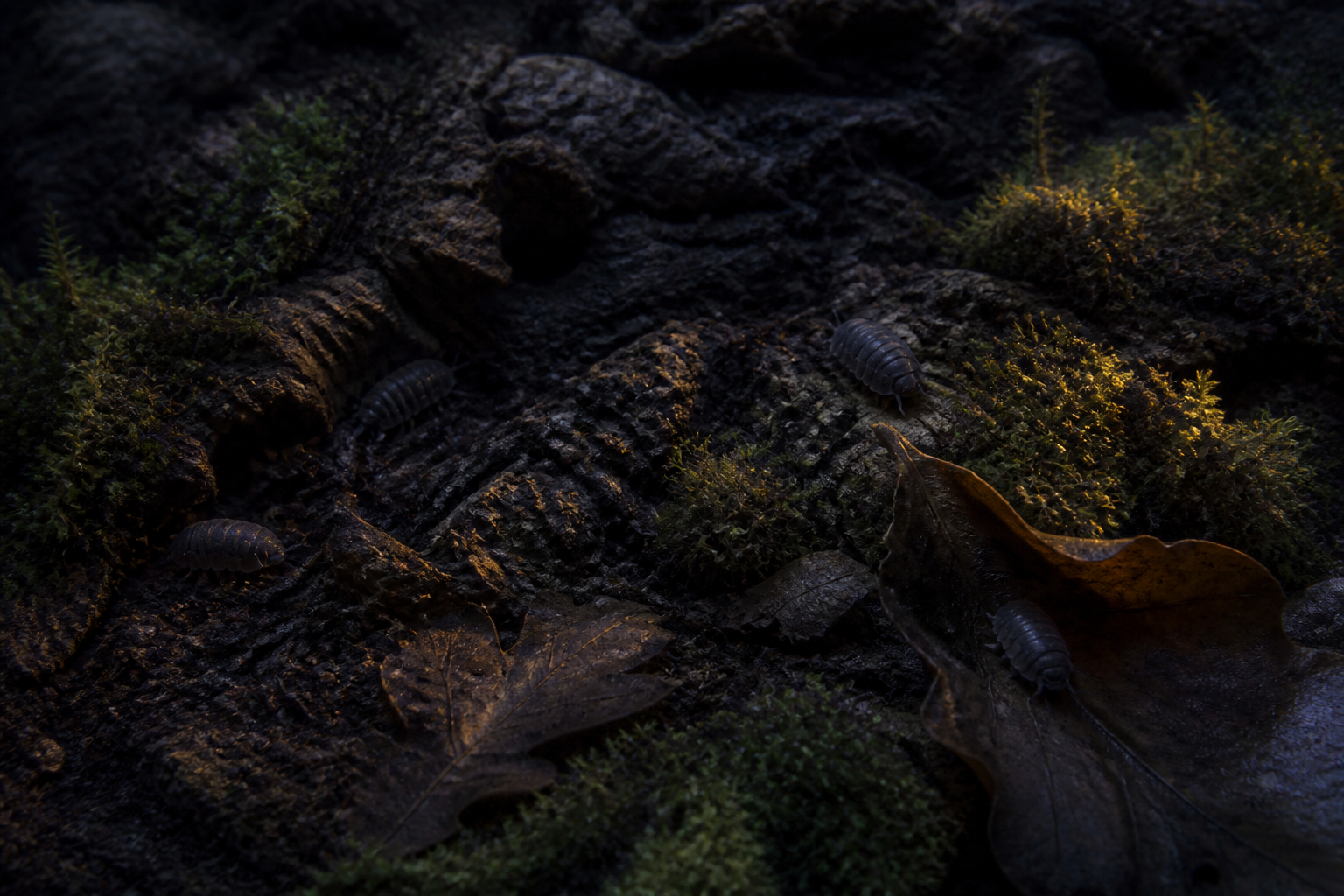
Climate Match
Build a kingdom your colony can call home. Match the enclosure's moisture, airflow, and temperature to the species you choose.
Choose the habitat before the colony
Three climate paths
Tropical, temperate, and semi-arid labels help you begin your search. The exact species care sheet is your guide to the conditions inside the enclosure.
Tropical
Plan for the species' warmer conditions and moisture needs. Retain a damp refuge while allowing fresh air to move through the enclosure.
Check before choosing: Can your room maintain the required temperature without the habitat overheating or drying out?
Temperate
Build around the species' preferred temperature range, with sheltered leaf litter and access to moisture. A temperate label does not mean the enclosure can be left to dry out.
Check before choosing: How much does the room temperature change between day and night or across seasons?
Semi-arid
Look closely at ventilation and the balance between a drier area and a protected damp refuge. Semi-arid does not mean completely dry.
Check before choosing: Can you keep one refuge reliably moist without wetting the whole enclosure?
A climate tag is a starting point. Do not apply one humidity number, watering schedule, or temperature target to every species in a group.
Build choice into the landscape
A moisture gradient, not one wet box
A moisture gradient gives the colony access to different conditions within the same habitat. Keep the layout appropriate to your species and check the substrate beneath the surface.
The damp refuge
Provide a sheltered area that retains moisture under leaf litter or a hide. Replenish water carefully so the refuge remains damp rather than waterlogged.
The drier retreat
Leave an area less wet, with cover and airflow. The size of this area depends on the species and how quickly your enclosure loses moisture.
Water one area deliberately, then observe how it changes. More ventilation can mean faster drying; less ventilation can retain moisture. Adjust gradually instead of following a fixed misting calendar.
Prepare the realm
Before your isopods arrive
Know the species
Confirm its exact identity and read its care sheet. Similar colors or a shared genus do not guarantee identical care.
Check the enclosure
Measure the temperature where the colony will live. Confirm secure ventilation, suitable substrate, hides, and an accessible damp refuge.
Observe the balance
Watch how quickly the substrate dries before adding animals. Recheck after changes to room heating, air conditioning, or ventilation.
Notes from the keeper's desk
Common climate questions
Should I choose by my outdoor climate?
Choose by the conditions you can maintain inside the enclosure. Your local weather can affect the room, but the colony lives in its own sheltered microhabitat.
Does a tropical species need a sealed, wet enclosure?
No. Maintain damp shelter while allowing air exchange through protected vents. The substrate should hold moisture without standing water or a sour, waterlogged layer. A tropical enclosure still needs ventilation and room for the animals to move away from the wettest area.
Can I use the same setup for every isopod?
No. Some isopods need more humid cover, while others need a larger, drier and more strongly ventilated area. All need access to moisture, but the size of that moist refuge and the rate of air exchange can differ. A uniformly wet box or a completely dry box is not a universal isopod setup.
Your next chapter
Find the right colony
Explore the isopods, open the care sheet for your chosen species, and confirm the exact count and option on its product page.