


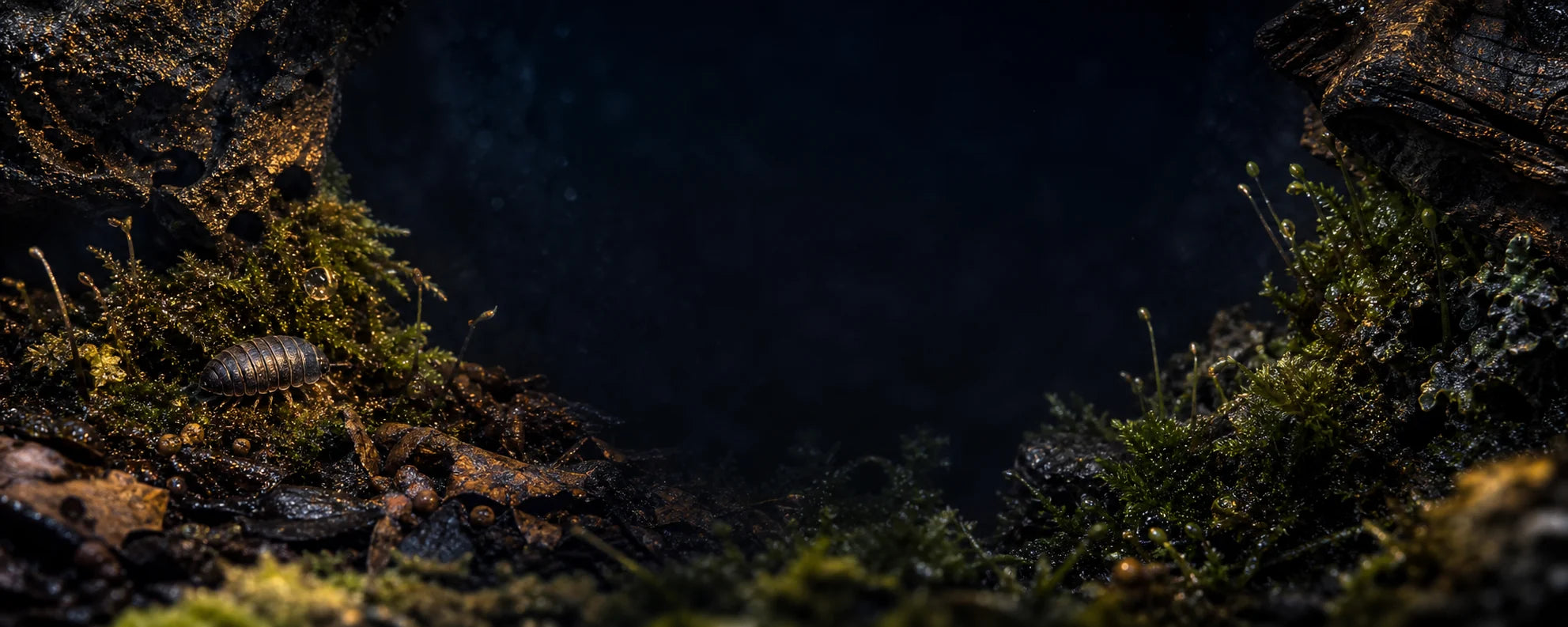
Wood provides shelter, feeding surface, and slowly decomposing material. The safest choices are clean hardwood pieces that are already beginning to decay and come from a known, untreated source.
Prefer known hardwood
Oak, beech, maple, and similar hardwoods are commonly used when they can be positively identified. Soft, punky interior wood is especially useful because it holds moisture and is easier to rasp.
Avoid manufactured and treated wood
- Pressure-treated lumber
- Painted, stained, or sealed wood
- Plywood, particleboard, and fiberboard
- Pallet wood of unknown history
- Aromatic or resin-rich wood unless species-specific guidance confirms safety
Prepare collected pieces
Collect with permission away from sprayed landscapes and polluted runoff. Remove visible predators outdoors, rinse away soil, and quarantine or freeze dry pieces to reduce hitchhikers. Let wood return to the intended moisture level before adding it.
Replace by condition, not appearance
Darkening and fungal staining are part of decomposition. Replace wood when it turns foul, slimy, contaminated, or too collapsed to function as a hide—not simply because it looks old.
Quick checklist
- Species positively identified
- No paint, glue, or treatment
- Collected legally from a clean site
- No chemical or sour odor
Pair safe wood with deep substrate and supplies from Care & Nutrition.


