


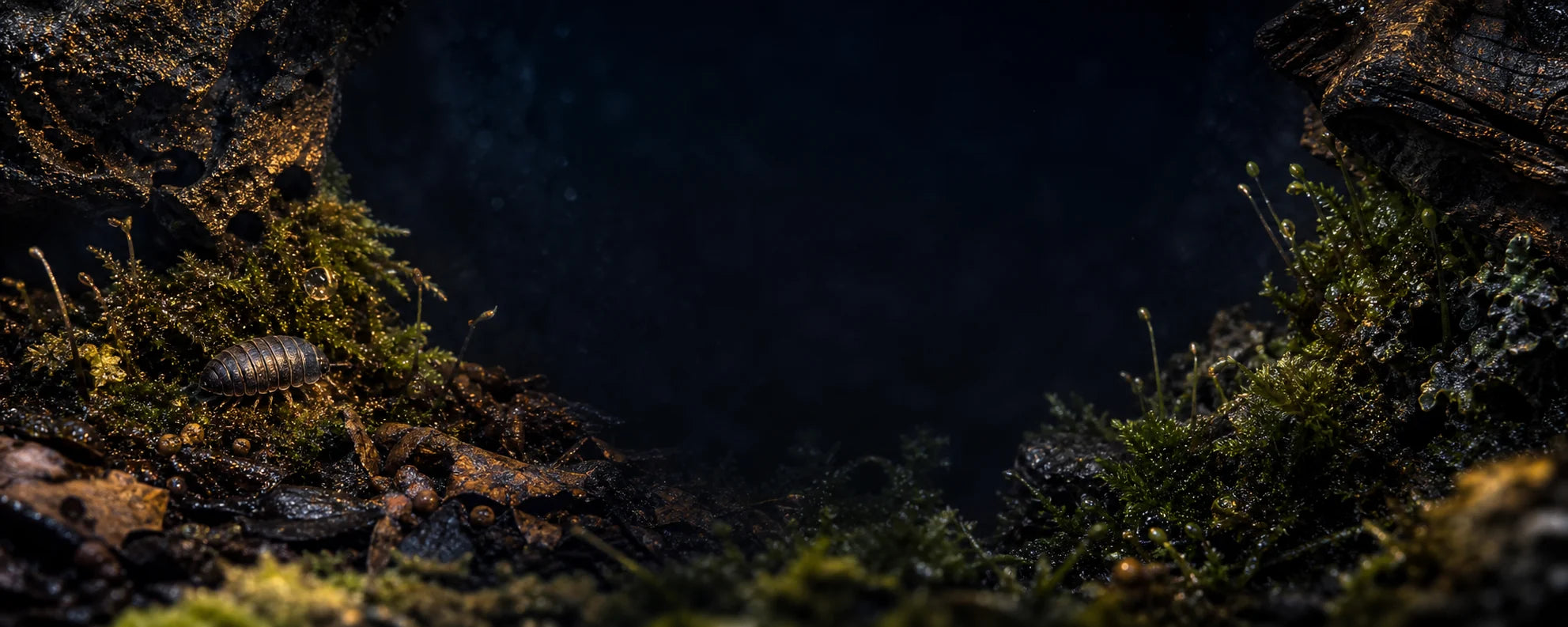
A large cleanup crew is not automatically a problem. Population becomes an issue when animals crowd food, damage sensitive plants, enter water dishes constantly, or compete visibly with the enclosure’s primary animal.
Reduce concentrated supplements first
Do not remove leaf litter or the damp refuge. Instead, reduce high-protein and prepared foods that create a dense feeding hotspot. Keep the ecological staples while slowing the extra calorie supply.
Harvest with simple traps
Place a favored food beneath a small piece of bark overnight. In the morning, move the occupied bark and nearby animals into a prepared culture bin. Repeat gradually rather than stripping the display in one session.
Create a separate culture
A dedicated bin turns excess animals into a backup population and makes future population management easier. Label the source so species and morph remain clear.
Never release captive isopods
Captive animals, substrate, and eggs should not be released outdoors. Regulations and ecological risk vary by species and location. Rehome through lawful channels or consult local authorities about responsible disposal when necessary.
Quick checklist
- Primary animal remains the priority
- Supplemental feeding reduced gradually
- Leaf litter and moisture retained
- Harvested animals contained securely
Set up a controlled overflow culture with habitat supplies.


