





Know your companions
Porcellio flavomarginatus
Porcellio flavomarginatus has a broad shield-like shape, pale lateral margins and variable light markings across a darker back. Although its name refers to an edged appearance, the visible skirt can be ivory or white rather than bright yellow.
This sheet belongs to the matching Isopod King listing. Check its selected count and current availability before ordering; the care guide does not change the product's options or shipping terms.
Build the stronghold
A refuge beneath the leaves
Create a broad leaf-covered floor with food-bearing substrate and several stable cork shelters. Include soft decayed hardwood and room for animals to move under cover. Spread hides along the gradient instead of concentrating all shelter above the wet corner.
Choose clean, pesticide-free materials and substrate without fertilizer or other chemical additives. Do not rely on plain coco fiber as the whole food supply. Secure ventilation openings against escapes, place the enclosure away from direct sun, and prepare it before the animals arrive.
Give them a choice
Two paths through the habitat
Keep a localized damp corner under cover and allow most surface material to remain drier and airy. Check beneath the refuge before watering; avoid routinely misting the entire enclosure. Make sure growing juveniles still have accessible sheltered moisture.
Air humidity alone cannot tell you whether the substrate under a hide is suitable. Check the refuge gently, keep cover in place, and adjust watering to ventilation and room conditions. Small juveniles need nearby sheltered moisture too.
Stock the royal pantry
Provisions for a living colony
Keep decaying leaves and suitable hardwood available, alongside a permanent calcium source. Add small amounts of protein and vegetables as supplements. Check consumption and remove leftovers before they spoil, especially around the moist corner.
A suitable calcium source, such as cuttlebone, should remain accessible. Fresh and protein foods supplement the habitat's decaying plant material. Remove spoiled leftovers, reduce the next portion when food persists, and keep an eye on leaf cover as the colony grows.
Steady care, patient growth
Take up the colony watch
On arrival
Have the enclosure ready before opening the shipping container. Follow our arrival and acclimation guide, and give the colony a quiet place to settle.
During maintenance
Check moisture, leaf cover, leftovers and airflow. Observe a familiar shelter without overturning every hide. Watch the moisture refuge and leaf supply while noting how the colony uses different shelters.
Give pale or molting animals space and avoid peeling away old shell. Females carry developing young in a brood pouch; growth varies with age, conditions and the starting group. Do not expect a fixed breeding timetable. Never release captive isopods outdoors.
A role in the living habitat
Every companion has a place
This is best approached as a dedicated display colony. Its preference for airflow and a drier wider surface may not fit wet, densely planted setups, so review compatibility before using it as a cleanup crew.
Continue removing excessive waste and checking the needs of every inhabitant. A cleanup crew supports routine care; it does not replace it.
Observe before you adjust
Read the signs along the trail
| What you notice | First checks |
|---|---|
| Refuge drying out | Inspect beneath the moss; restore moisture gradually without flooding. |
| Mold on fresh food | Remove leftovers and review portion size, water and airflow. |
| An overheated enclosure | Check sunlight and nearby heaters; protect the culture from heat. |
| Repeated losses | Record conditions and recent changes. Send clear photos to our keeper team. |
These are habitat checks, not diagnoses. If problems continue, ask Isopod King for help before making several large changes at once.
From the keeper’s camp
Questions along the journey
Should the border always be bright yellow?
No. The lateral edges can look pale ivory or white. Color and marking intensity vary; use the culture label and overall body traits rather than expecting every animal to match one photograph.
How often should I water?
Add water when the substrate in the damp refuge starts to dry, before that refuge becomes completely dry. Moisten that area through its depth without creating puddles, and leave a less-wet area available. Check moisture near the refuge daily at first; warm rooms and stronger ventilation make it dry faster, so there is no single weekly schedule that suits every enclosure.
Do Flavomarginatus Isopods need leaves as well as supplemental food?
Yes. Keep pesticide-free decaying hardwood leaves available, with soft, decaying hardwood. These materials are food and shelter, not just decoration. Offer supplemental food in small portions and remove it when it spoils; vegetables or protein food should not replace the leaf layer.
Find your colony
Begin your Flavomarginatus colony story
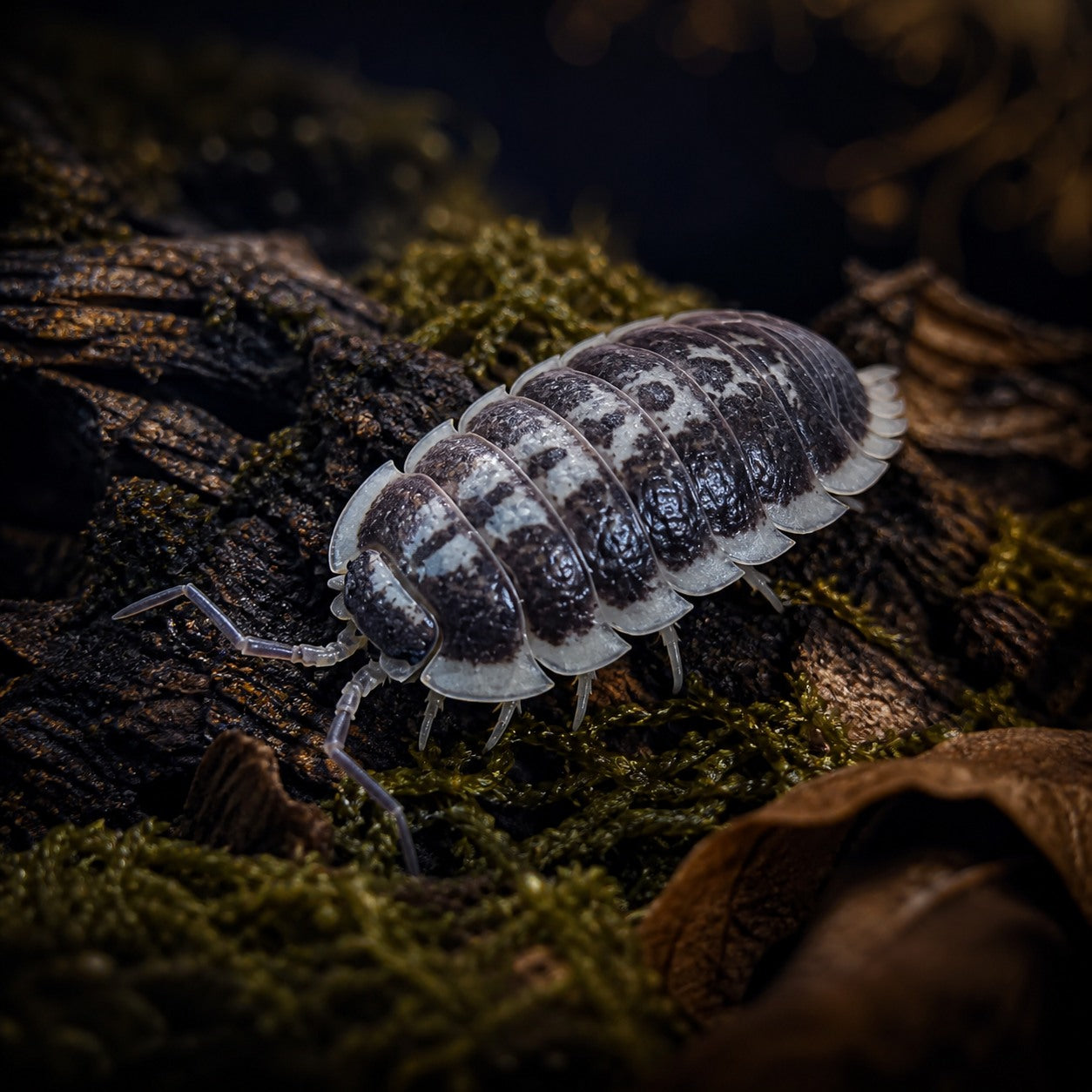
Flavomarginatus Isopods
Porcellio flavomarginatus
See the product page for current counts, prices, stock and shipping options.
The keeper’s journal
Your colony’s ongoing story
Watch the moisture refuge and leaf supply while noting how the colony uses different shelters. A few short notes on watering, feeding, molts and enclosure changes help reveal patterns without constant disturbance.
- Keep a usable damp refuge.
- Replenish leaves, suitable wood and calcium.
- Remove spoiled supplements.
- Record changes and ask for help when needed.
Care guide reviewed October 25, 2026. Speak with the Isopod King keeper team →